Health Tech2026.05.16
The First Drug Designed Entirely by AI Has Just Entered a Human Being
AI가 처음부터 끝까지 설계한 약물, 처음으로 사람에게 투여되다
읽기 도움말The Milestone
A Historic First: An AI-Designed Drug Enters a Human
역사적 첫 번째: AI가 설계한 신약이 사람에게 투여되다
In May 2026, a biotechnology company called Absci Corporation announced that it had dosed the first patient in a clinical trial with ABS-101 — an drug that was not discovered in nature, not adapted from an existing protein, and not modified from a compound found in any living organism. It was designed from scratch, entirely by artificial intelligence. This is the first time in history that a de novo AI-designed drug — meaning a molecule created by an AI system with no natural protein as a starting template — has been administered to a human being. The milestone matters not because ABS-101 is certain to work, but because it confirms that the drug discovery pipeline itself has a new, non-human author.
2026년 5월, 앱사이(Absci Corporation)라는 바이오텍 기업이 ABS-101을 투여받은 첫 번째 환자가 임상 연구에 등록됐다고 발표했습니다. ABS-101은 자연에서 발견된 것도, 기존 단백질을 변형한 것도, 어떤 생물에서 찾아낸 화합물을 수정한 것도 아닙니다. 처음부터 끝까지, 순전히 인공지능에 의해 설계된 항체 신약입니다. 이것은 역사상 처음으로 완전 생성형 AI 설계 신약(de novo AI-designed drug) — 즉 자연 단백질을 출발점으로 삼지 않고 AI 시스템이 처음부터 만들어낸 분자 — 이 사람에게 투여된 순간입니다. 이 이정표가 중요한 이유는 ABS-101이 반드시 효과가 있을 것이기 때문이 아니라, 신약 개발 파이프라인 자체에 인간이 아닌 새로운 저자가 등장했음을 확인했기 때문입니다.
The Background
How Drug Discovery Has Always Worked — Until Now
신약 개발이 지금까지 어떻게 이루어져 왔는가
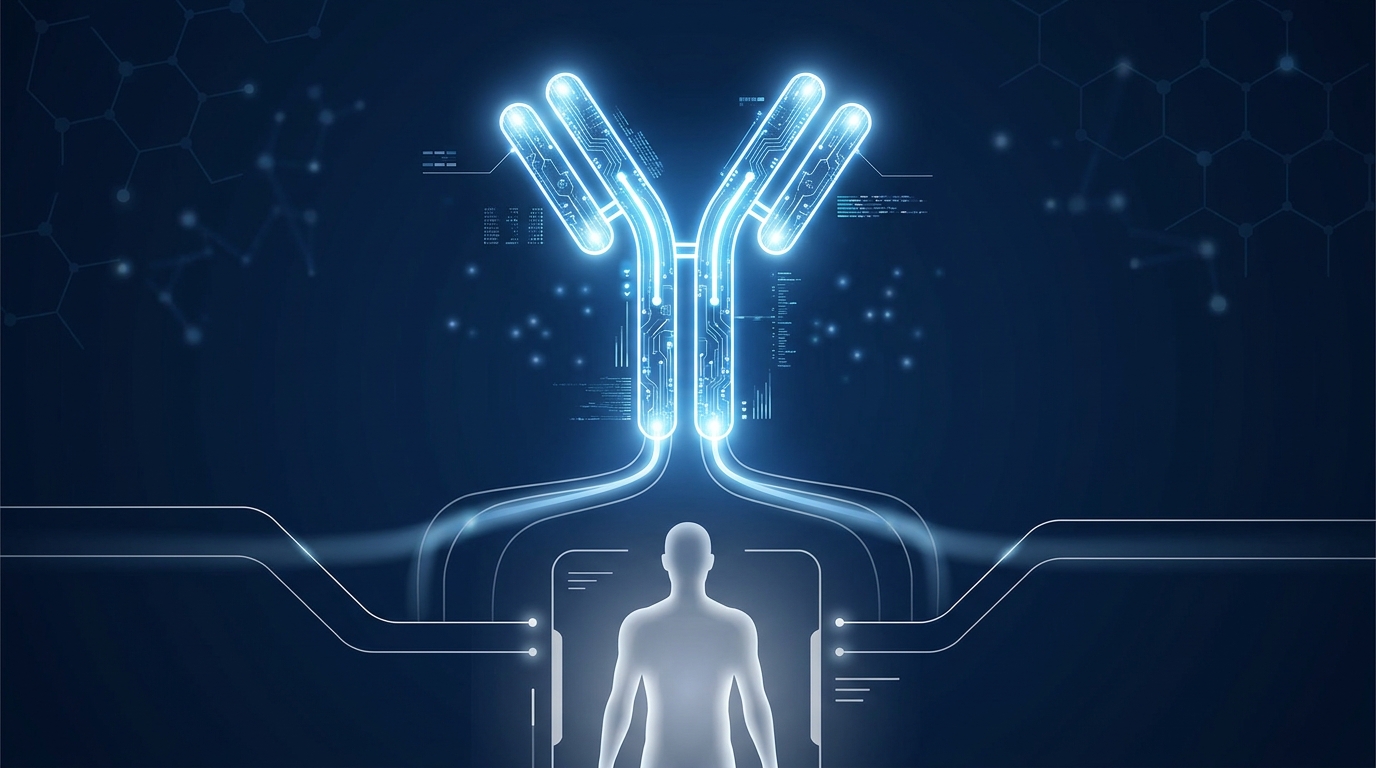
To understand why this is notable, it helps to first understand how drugs have traditionally been discovered. For most of pharmaceutical history, drug discovery meant searching: screening millions of natural compounds, modifying molecules already found in living organisms, or trying to copy the shape of proteins that the human body already makes. The starting point was always something that existed in nature. Antibodies are a particular type of drug that the immune system naturally produces. They are Y-shaped proteins that latch onto specific targets — viruses, cancer cells, or inflammatory proteins — and either neutralize them or flag them for destruction. Drug developers have spent decades learning how to find antibodies that bind to disease-relevant targets and then manufacture those antibodies at industrial scale.
이것이 왜 주목할 만한지 이해하려면, 신약이 전통적으로 어떻게 발견되어 왔는지 먼저 살펴봐야 합니다. 제약 역사의 대부분에서 신약 발견이란 탐색의 과정이었습니다. 수백만 개의 자연 화합물을 스크리닝하거나, 이미 생물체에서 발견된 분자를 변형하거나, 인체가 이미 만들어내는 단백질의 구조를 모방하려는 시도였습니다. 출발점은 언제나 자연에 존재하는 무언가였습니다. 항체(antibody)는 면역 체계가 자연적으로 생산하는 특별한 유형의 약물입니다. 항체는 Y자 형태의 단백질로, 바이러스, 암세포, 염증 단백질 같은 특정 표적에 달라붙어 이를 무력화하거나 파괴 신호를 보냅니다. 제약 개발자들은 수십 년에 걸쳐 질병 관련 표적에 결합하는 항체를 찾아내고, 이를 산업 규모로 제조하는 방법을 연구해 왔습니다.
The Approach
How Absci Used Generative AI to Design ABS-101
앱사이가 생성형 AI로 ABS-101을 설계한 방법
Absci's approach is fundamentally different. The company used a generative AI system — similar in concept to the AI that produces text or images, but trained on the biochemical language of proteins — to design an sequence that does not exist anywhere in nature. The AI was given a description of what the needed to do and then generated candidate sequences, optimizing for binding strength, stability, and the likelihood of surviving the human immune system without triggering a dangerous reaction. The target disease for ABS-101 is inflammatory bowel disease (IBD), a broad category that includes Crohn's disease and ulcerative colitis — chronic conditions in which the immune system attacks the lining of the digestive tract, causing pain, diarrhea, and potentially serious complications. IBD affects an estimated ten million people worldwide and is increasingly common in East Asia, including South Korea.
앱사이의 접근 방식은 근본적으로 다릅니다. 이 회사는 생성형 AI(generative AI) 시스템을 사용했습니다. 텍스트나 이미지를 생성하는 AI와 개념은 유사하지만, 단백질의 생화학적 언어로 훈련된 시스템입니다. 이 AI는 항체가 무엇을 해야 하는지에 대한 설명을 받은 뒤, 결합력, 안정성, 그리고 위험한 반응을 일으키지 않고 인간 면역 체계에서 살아남을 가능성을 최적화하여 후보 서열들을 생성했습니다. 그 결과물은 자연 어디에도 존재하지 않는 항체 서열입니다. ABS-101의 표적 질환은 염증성 장질환(IBD, inflammatory bowel disease)입니다. 크론병(Crohn's disease)과 궤양성 대장염을 포함하는 광범위한 범주로, 면역 체계가 소화관 내벽을 공격하여 통증, 설사, 잠재적으로 심각한 합병증을 일으키는 만성 질환입니다. IBD는 전 세계 약 1,000만 명에게 영향을 미치며, 한국을 포함한 동아시아에서도 빠르게 증가하고 있습니다.
The Competition
Absci Is Not Alone: The Race to Put AI Drugs Into Humans
앱사이만이 아니다: AI 신약을 사람에게 투여하는 경쟁
Absci is not alone in the race to put AI-designed drugs into humans. Insilico Medicine, a company co-founded in Hong Kong with research operations in multiple countries, has already advanced an AI-designed small-molecule drug for idiopathic pulmonary fibrosis (IPF) — a serious and often fatal lung disease — into Phase 3 trials. That drug, INS018_055, is a different type of molecule from ABS-101, but it shares the same origin story: it was designed by AI, not discovered in nature. A Phase 1 clinical trial is the first stage of testing a new drug in humans. It is not primarily designed to find out whether the drug works — that question is addressed in later phases. Phase 1 trials are designed to answer a more fundamental question: is this drug safe enough in humans to continue testing? Researchers monitor participants closely for side effects, track how the body processes the drug, and determine what doses can be given without causing harm.
AI 설계 신약을 사람에게 투여하는 경쟁에서 앱사이만이 유일한 주자는 아닙니다. 홍콩에 공동 설립되어 여러 국가에 연구 거점을 둔 인실리코 메디슨(Insilico Medicine)은 이미 AI 설계 소분자 신약을 특발성 폐섬유증(IPF, idiopathic pulmonary fibrosis) — 심각하고 종종 치명적인 폐 질환 — 에 대한 3상 임상 연구까지 진입시켰습니다. 그 약물인 INS018_055는 ABS-101과 분자 유형이 다르지만, 동일한 기원 이야기를 공유합니다. 자연에서 발견된 것이 아니라 AI가 설계했습니다. 1상 임상 연구(Phase 1 clinical trial)는 새로운 약물을 사람에게 처음으로 시험하는 단계입니다. 이 단계는 주로 약물이 효과가 있는지 확인하기 위한 것이 아닙니다 — 그 질문은 이후 단계에서 다루어집니다. 1상 임상 연구는 더 근본적인 질문에 답하기 위해 설계됩니다. 이 약물은 계속 시험을 이어갈 만큼 인체에서 충분히 안전한가? 연구자들은 참가자들의 부작용을 면밀히 모니터링하고, 신체가 약물을 처리하는 방식을 추적하며, 해를 끼치지 않고 투여할 수 있는 용량을 결정합니다.
The Caution
What Phase 1 Cannot Tell Us Yet
1상이 아직 알려줄 수 없는 것
The reason caution is warranted here is that AI-designed proteins, while they may perform well in laboratory tests, can behave unpredictably inside the complex chemistry of a living human body. An that appears perfectly stable in a cell culture dish may trigger an unexpected immune response in a patient, or may not reach its target tissue in sufficient concentrations. Phase 1 trials exist precisely because the gap between laboratory performance and human biology is often large and occasionally dangerous. If ABS-101 clears Phase 1 and eventually proves effective in later trials, the implications extend well beyond inflammatory bowel disease. Absci's platform is designed to work across many disease targets. A successful de novo AI-designed in humans would validate the platform itself — making it faster and potentially cheaper to design new antibodies for diseases where no good existing therapy exists, including certain cancers and autoimmune conditions that have proved difficult to treat. Korea has a particular stake in this development: domestic biotech firms including Hanall Biopharma and OliX Pharmaceuticals are pursuing AI-assisted programs that take a similar computational-first approach, and a Phase 2 success for ABS-101 would significantly raise investor confidence in the entire category. The commercial implications extend beyond any disease. If AI-designed antibodies prove generally effective, the cost of bringing a new biological drug to preclinical testing could fall from the current industry average near $2 billion to under $200 million — a compression that would fundamentally reshape how pharmaceutical companies decide which diseases to target. For now, the most important question is not whether AI will eventually design better drugs than human chemists — it is whether the AI's predictions about which molecular structures will be both safe and effective in actual human biology hold up under the rigorous scrutiny of a properly conducted clinical trial.
여기서 신중함이 필요한 이유는, AI가 설계한 단백질이 실험실 검사에서 잘 작동한다 하더라도 살아있는 인체의 복잡한 화학 환경 속에서는 예측하기 어렵게 작동할 수 있기 때문입니다. 세포 배양 접시에서 완벽하게 안정적으로 보이는 항체가 환자에게 예상치 못한 면역 반응을 유발하거나, 충분한 농도로 표적 조직에 도달하지 못할 수 있습니다. 1상 임상 연구가 존재하는 이유가 바로 이것입니다. 실험실 성과와 인체 생물학 사이의 간극은 종종 크고, 때로는 위험합니다. ABS-101이 1상을 통과하고 이후 임상 연구에서 효과가 입증된다면, 그 의미는 염증성 장질환을 훨씬 넘어섭니다. 앱사이의 플랫폼은 다양한 질환 표적에 작동하도록 설계됐습니다. 사람에게서 성공적인 완전 생성형 AI 설계 항체는 플랫폼 자체를 검증하게 됩니다. 기존에 적합한 항체 치료제가 없는 질환 — 특정 암과 치료가 어려운 자가면역 질환 포함 — 에 대한 새로운 항체를 더 빠르고 잠재적으로 더 저렴하게 설계할 수 있게 됩니다. 한국도 이 발전에 특별한 이해관계가 있어요. 한올바이오파마와 올릭스를 포함한 국내 바이오텍 기업들이 비슷한 계산 우선 접근법을 취하는 AI 지원 항체 프로그램을 추진하고 있어요. ABS-101의 2상 성공은 전체 카테고리에 대한 투자자 신뢰를 크게 높일 거예요. 상업적 시사점은 어떤 단일 질환을 넘어서요. AI 설계 항체가 일반적으로 효과적임이 입증되면, 새로운 생물학적 약물을 전임상 시험까지 가져오는 비용이 현재 업계 평균인 약 20억 달러에서 2억 달러 이하로 줄어들 수 있어요. 제약 회사들이 어떤 질환을 목표로 삼을지 결정하는 방식을 근본적으로 재편할 압축이에요. 지금으로서는, AI가 결국 인간 화학자보다 더 좋은 약을 설계할 것인지가 가장 중요한 질문이 아니에요. AI의 분자 구조 예측 — 안전하고 효과적인 것 — 이 제대로 진행된 임상시험의 엄격한 검증을 견뎌낼 것인지가 핵심이에요.
Patient action
A Field Moving From Concept to Clinical Evidence
개념에서 임상적 증거로 이동하는 분야
The broader context is a rapid consolidation in the AI drug discovery space. Also this week, Recursion Pharmaceuticals announced a $250 million acquisition of Exscientia, the British AI drug discovery company, combining Recursion's biological datasets with Exscientia's generative chemistry platform. Isomorphic Labs, the Alphabet spin-out, closed a $600 million Series B. The field is moving from concept to competition — and from competition toward clinical evidence. Before drawing conclusions about AI in drug discovery, remember that most Phase 1 therapies never reach patients — Absci's milestone is a reason for genuine excitement, but the real test is what happens inside those first human bodies over the next twelve months.
더 넓은 맥락에서 AI 신약 개발 분야는 빠르게 통합되고 있습니다. 같은 주, 리커전 파마슈티컬스(Recursion Pharmaceuticals)는 영국의 AI 신약 개발 기업 엑스사이언티아(Exscientia)를 2억 5,000만 달러에 인수한다고 발표했으며, 리커전의 생물학적 데이터셋과 엑스사이언티아의 생성형 화학 플랫폼을 결합합니다. 알파벳(Alphabet) 산하 이소모픽 랩스(Isomorphic Labs)는 6억 달러의 시리즈 B를 마감했습니다. 이 분야는 개념에서 경쟁으로, 그리고 경쟁에서 임상적 증거로 이동하고 있습니다. 신약 개발에서 AI에 대한 결론을 내리기 전에, 여러분이 기억할 것이 있어요. 1상 임상시험에 진입하는 치료제 대부분이 환자에게 닿지 못한다는 거예요. 앱사이의 성과는 진정한 흥분의 이유가 맞지만, 진짜 시험은 앞으로 12개월 동안 첫 번째 임상 참여자들 안에서 무슨 일이 일어나는가예요.
이 칼럼이 마음에 드셨나요?
새 칼럼이 발행되면 영문 + 한글 본문을 통째로 메일로 보내드려요. 매일 아침, 광고 없이.
언제든 한 번에 해지할 수 있어요.