AI Trend2026.04.29
AI Agents Now Write 25% of Google's Code — and the Rest of Tech Is Watching
구글 코드의 25%는 AI가 작성 — 개발자의 일은 어떻게 바뀌나
읽기 도움말The Number That Stopped Silicon Valley
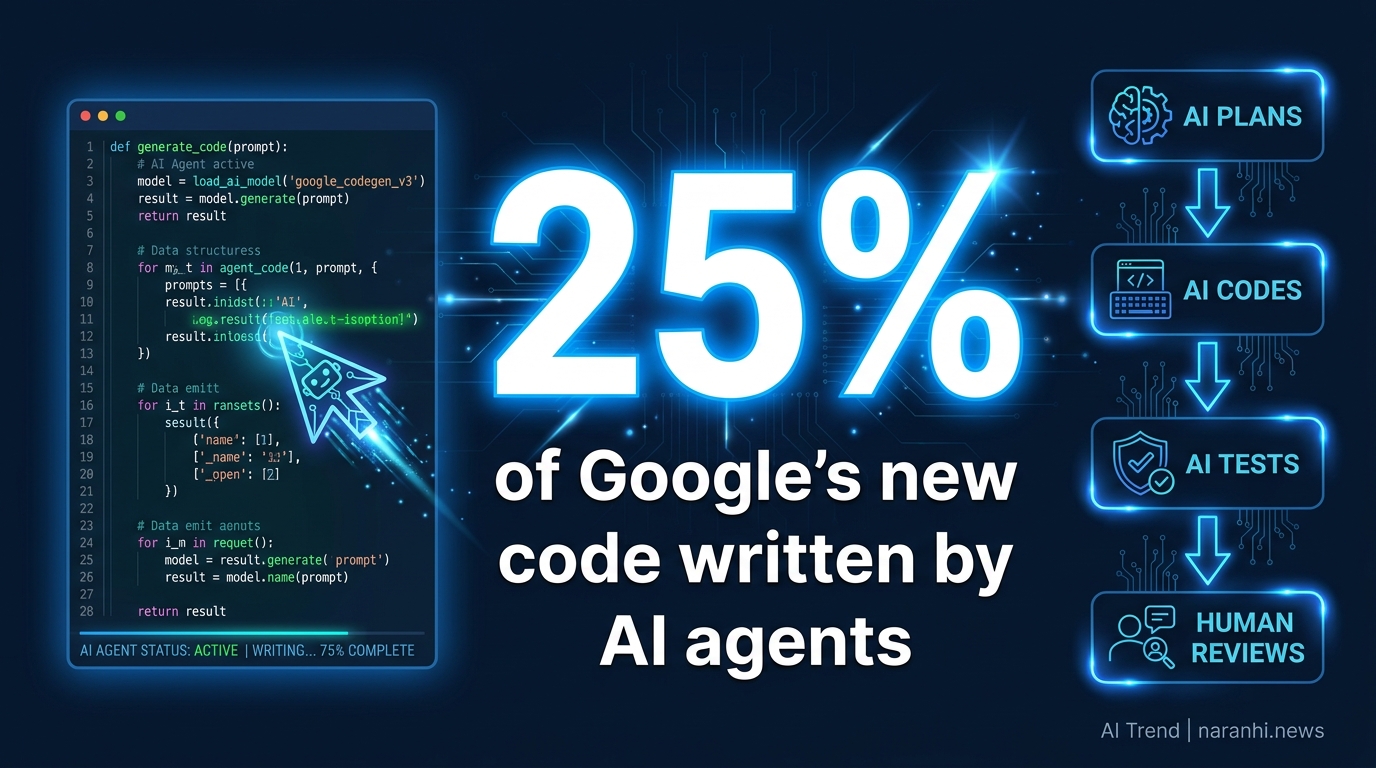
When Google's CEO Sundar Pichai stepped onto an earnings call last week, he dropped a statistic that quickly rippled across every tech newsroom in the world. Approximately 25% of all new code written at Google is now generated by AI agents — up from around 10% just six months ago. To put that in perspective: one in four lines of new code at the world's most powerful software company is no longer written by a human hand. Pichai called it "the fastest productivity transformation in Google's engineering history."
지난주 구글 CEO 순다르 피차이가 실적 발표 콜에 등장했을 때, 그는 전 세계 모든 테크 뉴스룸에 파장을 일으킨 통계 하나를 던졌어요. 구글에서 작성되는 신규 코드의 약 25%가 이제 AI 에이전트에 의해 생성된다고 해요 — 불과 6개월 전 약 10%에서 올라온 수치예요. 이 수치를 더 명확히 보면, 세계에서 가장 강력한 소프트웨어 기업에서 작성되는 신규 코드 네 줄 중 하나가 이제는 사람의 손으로 쓰이지 않는다는 뜻이에요. 피차이는 이를 "구글 엔지니어링 역사상 가장 빠른 생산성 전환"이라고 불렀어요.
What AI Agents Actually Do
It is worth pausing to understand what "AI agent" means here — because it is more than a smarter autocomplete. Unlike a copilot tool that suggests the next line, an AI agent receives a task description, plans a solution, writes the code, runs the tests, and fixes the errors — all without a human in the loop. Google engineers describe the shift as moving from "AI assists me" to "AI handles the task while I review the output." The agent writes functional code; the human's job shifts toward setting goals, reviewing results, and making judgment calls the AI cannot reliably make.
여기서 "AI 에이전트"가 무엇을 의미하는지 잠시 짚어볼 필요가 있어요 — 더 똑똑한 자동완성 그 이상이거든요. 다음 줄을 제안하는 코파일럿 도구와 달리, AI 에이전트는 작업 설명을 받고, 해결책을 계획하고, 코드를 작성하고, 테스트를 실행하고, 오류를 수정해요 — 이 모든 것을 사람의 개입 없이 처리해요. 구글 엔지니어들은 이 변화를 "AI가 나를 돕는" 것에서 "AI가 작업을 처리하고 나는 결과물을 검토하는" 것으로의 이동이라고 묘사해요. 에이전트가 기능하는 코드를 작성하고, 사람의 역할은 목표 설정, 결과 검토, AI가 신뢰할 수 없는 판단을 내리는 것으로 이동해요.
The Jobs Question
The question that lit up the internet after Pichai's announcement was not about technology — it was about people. Google has already begun reducing contractor headcount in some software testing roles as a result of the shift. For context, software quality assurance — writing test scripts and verifying that code works correctly — is one of the entry-level roles that has historically been a starting point for many developers' careers. Economists are divided on what comes next: some point to this as early evidence of structural change in white-collar employment, while others argue it represents rather than replacement.
피차이의 발표 이후 인터넷을 달군 질문은 기술에 관한 것이 아니었어요 — 바로 사람에 관한 것이었어요. 구글은 이미 이 변화의 결과로 일부 소프트웨어 테스트 역할에서 계약직 인원을 줄이기 시작했어요. 참고로 소프트웨어 품질 보증 — 테스트 스크립트를 작성하고 코드가 올바르게 작동하는지 확인하는 것 — 은 역사적으로 많은 개발자 경력의 출발점이었던 초급 역할 중 하나예요. 경제학자들은 다음에 무슨 일이 일어날지에 대해 의견이 갈려요. 일부는 이것이 화이트칼라 고용의 구조적 변화를 보여주는 초기 증거라고 지적하고, 다른 이들은 이것이 대체보다는 증강을 나타낸다고 주장해요.
Not Just Google
Google is the first major company to put a precise number on AI-generated code in a public earnings call, but the pattern exists across the industry. Microsoft has claimed that Copilot writes up to 40% of code in some developer workflows, though that figure includes shorter autocomplete suggestions. A survey by SlashData in early 2026 found that 72% of developers worldwide now use AI code-generation tools at least once a week — up from 48% a year earlier. The gap between early adopters and those who have not yet integrated these tools into their daily work is growing into what some researchers call a "productivity divide."
구글이 공개 실적 발표에서 AI 생성 코드에 대한 정확한 수치를 제시한 최초의 주요 기업이지만, 이 패턴은 업계 전반에 존재해요. 마이크로소프트는 일부 개발자 워크플로에서 코파일럿이 코드의 최대 40%를 작성한다고 주장했지만, 그 수치에는 더 짧은 자동완성 제안이 포함돼 있어요. 2026년 초 슬래시데이터의 설문 조사에 따르면 전 세계 개발자의 72%가 현재 주 1회 이상 AI 코드 생성 도구를 사용하고 있으며 — 1년 전 48%에서 올라온 수치예요. 이 도구들을 일상 업무에 통합한 조기 수용자와 아직 그렇지 않은 이들 사이의 격차가, 일부 연구자들이 "생산성 격차"라고 부르는 것으로 커지고 있어요.
What Developers Say
Reactions from developers themselves are more nuanced than the headlines suggest. Many senior engineers report that AI agents have eliminated the tedious parts of the job — writing boilerplate code, debugging obvious errors, and generating documentation — freeing them to focus on architecture and design decisions. Younger developers, however, worry that they are missing the formative experience of writing code from scratch — skills built through struggle that AI now short-circuits. "The question is whether we are producing better software engineers, or just faster ones," one senior developer at a top US tech firm told VentureBeat.
개발자들 스스로의 반응은 헤드라인이 시사하는 것보다 훨씬 더 미묘해요. 많은 시니어 엔지니어들은 AI 에이전트가 지루한 작업들 — 보일러플레이트 코드 작성, 명백한 오류 디버깅, 문서 생성 — 을 없애줬고, 덕분에 아키텍처와 설계 결정에 집중할 수 있게 됐다고 말해요. 그러나 젊은 개발자들은 처음부터 코드를 작성하는 형성적 경험 — AI가 이제 지름길로 만들어버린 어려움을 통해 쌓는 능력 — 을 놓치고 있다고 우려해요. "우리가 더 나은 소프트웨어 엔지니어를 만들고 있는 건지, 아니면 그냥 더 빠른 엔지니어를 만들고 있는 건지가 문제예요"라고 한 미국 주요 테크 기업의 시니어 개발자가 벤처비트에 말했어요.
What you can do
Pichai's 25% figure is not the end point — it is an early data point on a trend that is moving quickly. Whether you write software today or manage people who do, the most useful reframe is not 'will AI replace me?' but 'what decisions still require a human who deeply understands the system?' — that question points directly at the skills worth building right now.
피차이의 25% 수치는 종착점이 아니에요 — 빠르게 움직이고 있는 트렌드의 초기 데이터 포인트예요. 지금 코드를 작성하든, 그런 사람들을 관리하든, 여러분에게 가장 유용한 질문은 'AI가 나를 대체할까?'가 아니라 '시스템을 깊이 이해하는 인간이 여전히 필요한 결정은 무엇인가?'예요. 그 질문이 지금 당장 쌓을 가치가 있는 기술을 정확하게 가리켜요.
이 칼럼이 마음에 드셨나요?
새 칼럼이 발행되면 영문 + 한글 본문을 통째로 메일로 보내드려요. 매일 아침, 광고 없이.
언제든 한 번에 해지할 수 있어요.