Health Tech2026.05.19
The 510(k) Loophole: How AI Medical Devices Reach Patients Without Proof They Work
FDA의 허점: AI 의료기기는 어떻게 검증 없이 시장에 나올까요
읽기 도움말Intro
The AI Reading Your Scan May Never Have Been Properly Tested
당신의 영상을 분석하는 AI, 제대로 검증받았을까요
Imagine your doctor glances at an AI-generated alert on the screen and decides your chest scan looks normal — confident because the system has FDA . But that may have required no large-scale clinical trial, no independent validation on diverse patient populations, and no ongoing performance monitoring after deployment.
의사가 화면에 뜬 AI 알림을 보고 당신의 흉부 스캔이 정상이라고 판단해요 — FDA 허가를 받은 시스템이니까 안심하고요. 그런데 그 허가는 대규모 임상 검증 절차 없이, 다양한 환자군 검증 없이, 배포 후 성능 모니터링도 없이 받은 것일 수 있어요.
What's new
The 510(k) Path: Fast Lane for Medical AI
510(k) 경로: 의료 AI의 패스트레인
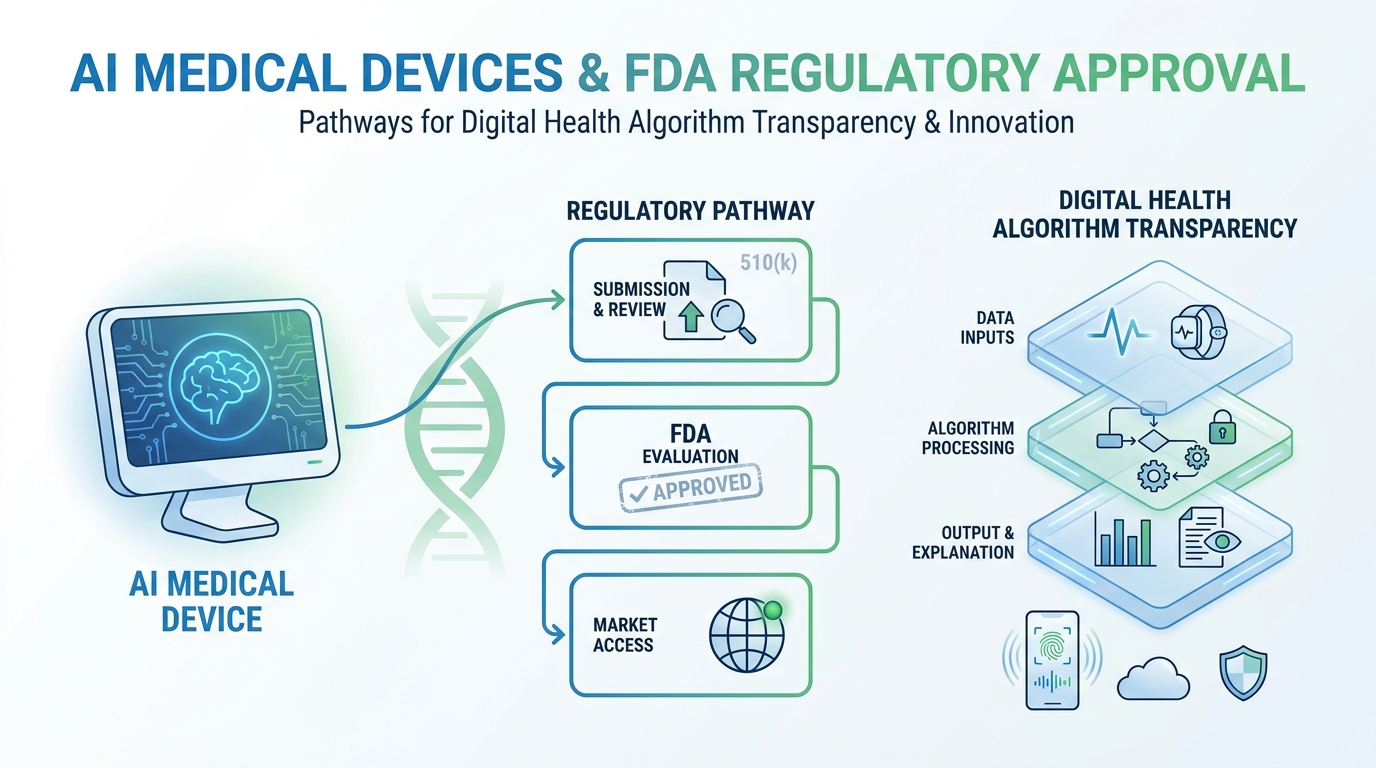
The FDA's 510(k) pathway — originally designed for simple improvements to existing devices — has become the default route for most AI-powered medical software. Under 510(k), a company only needs to show its device is "substantially equivalent" to a predicate device — an older product already on the market — without conducting new clinical trials. Roughly three out of four AI and machine learning medical devices cleared by the FDA in recent years took this easier route, according to industry trackers.
FDA의 510(k) 허가 경로는 원래 기존 기기의 단순 개선품을 위해 만들어진 제도인데, 이제 대부분의 AI 의료 소프트웨어가 이 경로를 기본으로 사용하고 있어요. 510(k) 규정에서는 새 기기가 이미 시판 중인 기존 유사 기기와 '실질적으로 동등하다'는 것만 증명하면 되고, 새로운 임상 검증 절차를 수행할 필요가 없어요. 업계 추적 데이터에 따르면, 최근 FDA 허가를 받은 AI·머신러닝 의료기기 중 약 4개 중 3개가 이 간편한 경로를 통해 시장에 진입했어요.
Why it matters
When an Algorithm Drifts, Nobody Notices
알고리즘이 표류하면, 아무도 모를 수 있어요
The core problem is that AI algorithms are not static — they can experience algorithm drift, where their accuracy quietly degrades as they encounter patient populations different from those used in training. Unlike a drug that behaves predictably after approval, a deployed AI model may perform well at a large urban hospital but struggle at a rural clinic with an older patient population. Critics argue the 510(k) pathway creates a systemic black box problem: companies are not required to disclose training data or bias testing results, leaving hospitals and patients with no way to verify the algorithm's limitations.
핵심 문제는 AI 알고리즘이 고정된 도구가 아니라는 거예요 — 알고리즘 표류 현상으로 훈련 때와 다른 환자군을 만나면 정확도가 소리 없이 떨어질 수 있어요. 허가 후 예측 가능하게 작용하는 약과 달리, 배포된 AI 모델은 대형 도시 병원에서는 잘 작동하다가 노령 환자 비율이 높은 시골 의원에서는 성능이 저하될 수 있어요. 비평가들은 510(k) 경로가 구조적인 블랙박스 문제를 만들어낸다고 지적해요 — 기업들이 훈련 데이터의 인구 구성이나 편향 검증 결과를 공개할 의무가 없어서, 병원과 환자는 알고리즘의 한계를 스스로 검증할 방법이 없어요.
Context
A Regulatory Gap That Spans Borders
국경을 넘는 규제 허점
The FDA has acknowledged the limitations of its current framework and initiatives to develop stricter post-market monitoring rules for AI devices since 2023. However, reform has moved slowly, partly because the agency faces pressure from industry stakeholders who argue that more requirements would innovation and delay access to potentially life-saving tools. The gap matters beyond U.S. borders: South Korea's Ministry of Food and Drug Safety (MFDS) closely mirrors FDA guidance when developing its own AI medical device review criteria, meaning structural flaws in the U.S. system can into Korean healthcare. Researchers have documented real-world performance gaps: some FDA-cleared AI tools have shown de facto , performing measurably worse for women, elderly patients, or non-white populations compared to the groups that dominated training datasets.
FDA는 현행 체계의 한계를 인정하고, 2023년부터 AI 의료기기에 대한 더 엄격한 시판 후 모니터링 규정 마련에 나섰어요. 하지만 개혁은 더디게 진행되고 있어요 — 더 엄격한 요건이 혁신을 저해하고 생명을 구할 수 있는 도구의 보급을 늦출 수 있다고 주장하는 업계의 압박이 한 이유예요. 이 허점은 미국을 넘어 의미를 가져요 — 한국 식약처는 AI 의료기기 심사 기준을 마련할 때 FDA 가이드라인을 긴밀하게 참조하기 때문에, 미국 시스템의 구조적 결함이 한국 의료 현장에도 반영될 수 있어요. 연구자들은 실제 성능 격차를 기록해왔어요 — 일부 FDA 허가 AI 도구들이 여성, 고령자, 비백인 환자에서 사실상 뚜렷한 성능 차이를 보이는 것으로 나타났는데, 이들이 훈련 데이터에서 소수를 차지했기 때문이에요.
Patient action
Asking Better Questions About the AI in Your Care
내 진료에 쓰이는 AI에 더 나은 질문을 하는 법
Healthcare providers and informed patients can push back by asking what data an AI tool was trained on, whether it has been validated for their specific patient population, and how its performance is tracked over time. Meaningful reform of the 510(k) pathway will require regulators, hospitals, and patients to demand greater — not as a barrier to innovation, but as the foundation for earning real trust in medical AI. Before accepting any AI-assisted diagnosis, ask your doctor which algorithm analyzed your data and whether it has been validated on patients like you — because the only way to know whether that tool is brilliant, biased, or outdated is to start asking.
의료 제공자와 정보에 밝은 환자는 AI 도구가 어떤 데이터로 학습됐는지, 자신의 환자 집단에 맞게 독립적으로 검증됐는지, 시간이 지나면서 성능이 어떻게 추적되는지를 질문함으로써 목소리를 낼 수 있어요. 510(k) 경로의 의미 있는 개혁은 규제 당국, 병원, 환자가 더 큰 투명성을 요구할 때 가능해요 — 혁신의 장벽이 아니라, 의료 AI에 대한 진정한 신뢰를 쌓는 토대로서요. 당신의 영상을 분석하는 AI는 뛰어난 도구일 수도 있지만, 당신과 비슷한 환자에게 검증된 적 없는 낡거나 편향된 시스템일 수도 있어요 — 그것을 알 수 있는 방법은 질문을 시작하는 것뿐이에요.
이 칼럼이 마음에 드셨나요?
새 칼럼이 발행되면 영문 + 한글 본문을 통째로 메일로 보내드려요. 매일 아침, 광고 없이.
언제든 한 번에 해지할 수 있어요.