Business2026.05.06
Amazon's Big Split: Why AWS Is Dividing Its Cloud Empire Into Two
아마존의 대분할: AWS가 클라우드 제국을 둘로 나누는 이유
읽기 도움말Why Amazon Is Splitting Its Crown Jewel
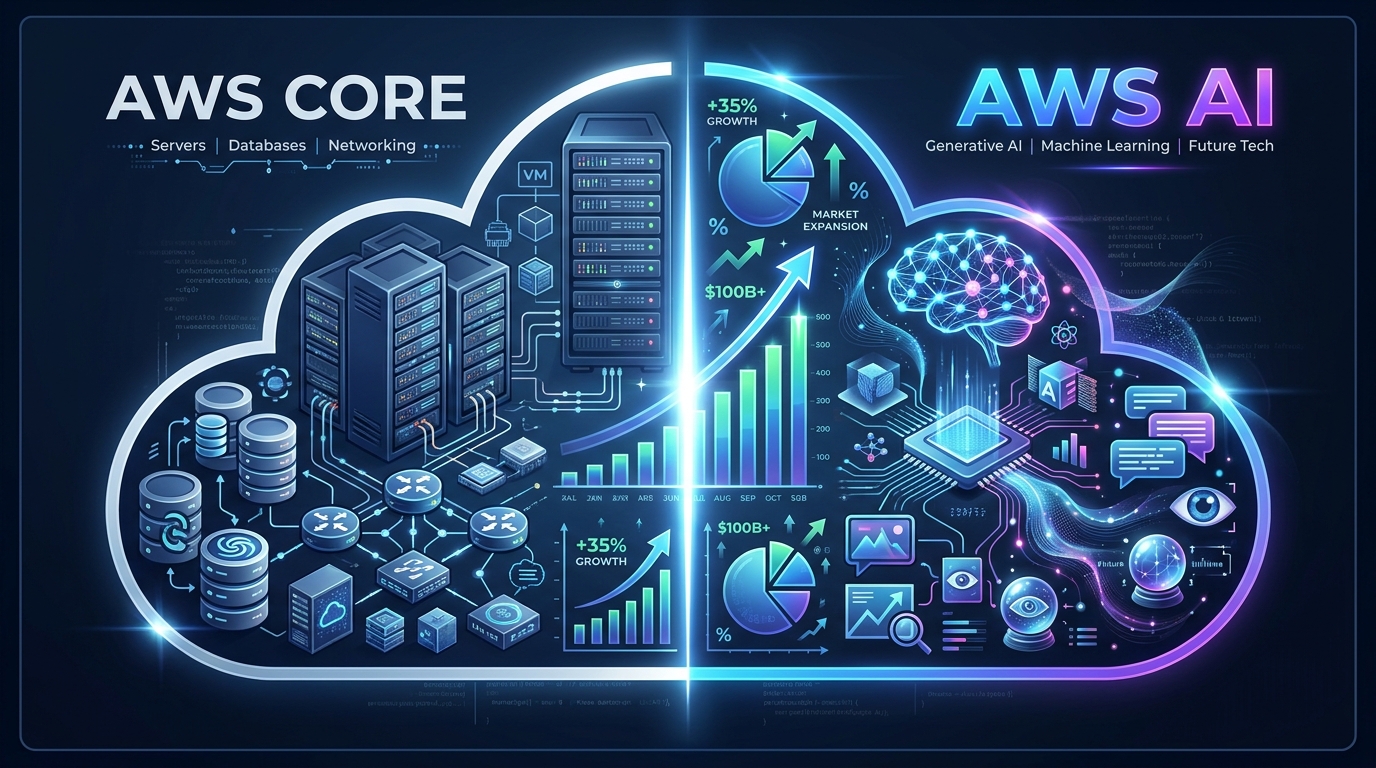
For the past fifteen years, Amazon Web Services has been the most profitable division inside one of the world's largest companies. It is the engine that funds Amazon's retail losses, its logistics network, and its entertainment ambitions. But in May 2026, Amazon announced a decision that few had anticipated: it is splitting AWS into two completely separate business divisions. The cloud empire is being divided. The will create two units: AWS Core and AWS AI. AWS Core will house the traditional cloud infrastructure businesses — data storage, computing power, networking — that have been the backbone of the internet economy for two decades. AWS AI will contain the company's fast-growing generative AI services, including Amazon Bedrock, Alexa for Enterprise, and a suite of AI development tools used by tens of thousands of business customers.
지난 15년 동안, 아마존 웹 서비스(Amazon Web Services, AWS)는 세계 최대 기업 중 하나의 내부에서 가장 수익성 높은 사업부였습니다. AWS는 아마존의 리테일 적자, 물류 네트워크, 엔터테인먼트 야망에 자금을 대는 엔진이었습니다. 그런데 2026년 5월, 아마존은 거의 아무도 예상치 못했던 결정을 발표했습니다. AWS를 두 개의 완전히 독립된 사업부로 분리한다는 것입니다. 클라우드 제국이 나뉘고 있습니다. 이 구조개편(restructuring)으로 두 개의 사업부가 만들어집니다. AWS Core와 AWS AI입니다. AWS Core에는 20년간 인터넷 경제의 근간을 이뤄온 전통적인 클라우드 인프라 사업 — 데이터 저장, 컴퓨팅 파워, 네트워킹 — 이 담깁니다. AWS AI에는 아마존 Bedrock, 엔터프라이즈용 Alexa, 수만 개의 기업 고객이 사용하는 AI 개발 툴 등 빠르게 성장하는 생성형 AI(generative AI) 서비스들이 포함됩니다.
AWS Core vs AWS AI — What Each Does
The distinction matters because the two businesses are growing at very different rates and facing very different competitive pressures. AWS Core — think of it as the plumbing of the cloud — is a mature, high-margin business growing at roughly 18% annually. It competes directly with Microsoft Azure and Google Cloud in a market where price and reliability are the primary differentiators. AWS AI, by contrast, is growing at over 90% annually — a rate that risks being obscured when its numbers are averaged in with the slower-growing Core business. Giving it independent profit-and-loss , known in business as P&L responsibility, means its leadership team will be judged on the AI unit's performance alone, creating sharper incentives and cleaner strategic focus.
이 구분이 중요한 이유는 두 사업이 매우 다른 속도로 성장하며 전혀 다른 경쟁 압박에 직면해 있기 때문입니다. AWS Core — 클라우드의 배관이라고 생각하면 됩니다 — 는 연간 약 18% 성장하는 성숙한, 고마진 사업입니다. 가격과 안정성이 주요 차별화 요소인 시장에서 마이크로소프트 Azure, 구글 클라우드와 직접 경쟁합니다. 반면 AWS AI는 연간 90% 이상 성장하고 있습니다. 이 수치는 성장 속도가 느린 Core 사업과 평균을 내면 묻혀버릴 위험이 있습니다. 독립적인 손익 책임(profit-and-loss accountability), 즉 P&L 책임을 부여한다는 것은, 리더십 팀이 AI 사업부의 성과만으로 평가받게 된다는 뜻입니다. 이는 더 강한 인센티브와 명확한 전략적 집중을 만들어냅니다.
The Spinoff Question
Wall Street immediately began asking the obvious follow-up question: is this split a precursor to spinning off AWS AI as a separate publicly traded company? Analysts at Goldman Sachs estimate the AI division could carry a standalone market capitalisation of $350 to $450 billion — comparable in size to the entire market value of IBM, Oracle, or Salesforce. If AWS AI were its own company today, it would already rank among the twenty largest companies in the world. Amazon has not confirmed any plans, describing the split as an internal organisational change designed to improve and speed. But the corporate history of big-tech suggests that separating a fast-growing unit into a standalone division with its own P&L is almost always the first step toward eventual independence. Google's creation of Alphabet in 2015 followed precisely this pattern.
월가는 즉각 명백한 후속 질문을 던졌습니다. 이 분리가 AWS AI를 독립된 상장 기업으로 분사(spinoff)하기 위한 전조인가? 골드만삭스 애널리스트들은 AI 사업부의 독립적 시가총액(market capitalisation)이 3,500억~4,500억 달러에 이를 수 있다고 추산합니다. IBM, 오라클, 세일즈포스의 전체 시가총액과 맞먹는 규모입니다. 만약 AWS AI가 오늘 독립 기업이라면, 이미 세계 20대 기업 반열에 들어 있을 것입니다. 아마존은 어떠한 분사 계획도 확인하지 않았으며, 이번 분리를 책임성과 속도 향상을 위한 내부 조직 변경이라고 설명했습니다. 하지만 빅테크 구조개편의 역사는, 빠르게 성장하는 사업부를 독립적인 P&L을 가진 독립 사업부로 분리하는 것이 결국 거의 항상 독립의 첫 단계임을 보여줍니다. 2015년 구글의 알파벳(Alphabet) 창설이 정확히 이 패턴을 따랐습니다.
What the Split Means for Competitors
For Microsoft and Google, the structural change is a competitive worth paying close attention to. AWS AI's independence means it can now form partnerships with AI model providers — including Anthropic and Mistral — without the awkwardness of those partnerships being evaluated through the lens of AWS Core's interests. An autonomous AI division can move faster, bid more aggressively, and attract talent with equity that directly reflects AI business performance. Microsoft Azure has built its AI moat largely through its exclusive partnership with OpenAI, a relationship that now extends to deep model integration across Office 365, Teams, and Copilot. Google Cloud has Gemini. The AWS AI split could be read as Amazon's acknowledgment that it needs an AI identity that stands — one that is not merely a feature of the larger AWS infrastructure business but a genuine AI platform company in its own right. Google Cloud, meanwhile, is investing $75 billion in AI infrastructure in 2026 alone, betting that a decade of machine learning research and its custom TPU chips give it a structural cost advantage that neither Amazon nor Microsoft can easily replicate.
마이크로소프트와 구글에게 이 구조적 변화는 주의 깊게 살펴볼 경쟁적 신호입니다. AWS AI의 독립은, 이제 Anthropic, Mistral 등 제3자 AI 모델 제공업체(third-party AI model providers)와 AWS Core의 이해관계 시각으로 평가받는 어색함 없이 파트너십을 맺을 수 있다는 뜻입니다. 자율적인 AI 사업부는 더 빠르게 움직이고, 더 공격적으로 입찰하고, AI 사업 성과를 직접 반영하는 주식으로 인재를 유치할 수 있습니다. 마이크로소프트 Azure는 OpenAI와의 독점 파트너십을 통해 AI 해자(moat)를 구축했습니다. 이 관계는 이제 Office 365, Teams, Copilot 전반에 걸친 깊은 모델 통합으로 확장되었습니다. 구글 클라우드에는 Gemini가 있습니다. AWS AI 분리는, 아마존이 독립적으로 서는 AI 정체성이 필요하다는 인식 — 더 큰 AWS 인프라 사업의 기능에 머물지 않고 그 자체로 진정한 AI 플랫폼 기업 — 을 필요로 한다는 인정으로 읽힐 수 있습니다. 한편 구글 클라우드는 2026년에만 750억 달러를 AI 인프라에 투자하고 있어요. 10년간 머신러닝 연구와 맞춤형 TPU 칩이 아마존이나 마이크로소프트가 쉽게 복제할 수 없는 구조적 비용 우위를 제공한다는 데 베팅하는 거예요.
The bigger picture
Amazon's reflects a broader challenge facing every large technology conglomerate: how do you manage a business that is simultaneously the present and the future — where the legacy infrastructure division funds today's operations, and the AI division bets on tomorrow's relevance? The answer, increasingly, is structural separation. The logic is straightforward: legacy infrastructure businesses optimise for efficiency, cost reduction, and incremental improvement. AI businesses require a different mentality — rapid experimentation, tolerance for failure, willingness to cannibalise existing revenue streams, and the ability to attract talent who want to work on frontier technology, not on maintaining existing systems. These cultures are often incompatible under the same roof. This tension is not unique to Amazon. It is the central management challenge of the current technology era. IBM spent two decades trying to manage its legacy mainframe business alongside a push into cloud and AI before eventually spinning off the infrastructure division in 2021. General Electric's failed attempt to manage aviation, healthcare, and energy under one balance sheet became one of the defining business cautionary tales of the 2010s. For Amazon's employees, the split raises immediate practical questions. Which division will I work for? How will my equity be valued? Will the two units compete with each other for internal resources? These are the messy realities of any large corporate , and they typically take 18 to 24 months to fully resolve — a period during which execution risk is highest and competitors are most alert to opportunistically poaching talent. The market reacted with cautious optimism. Amazon shares rose 3.8% on the announcement, with investors reading the structural clarity as a positive . But the more important test will come in twelve months, when investors can assess whether the AI division's separated P&L reveals a business that was being undervalued inside the larger AWS umbrella, or one that was actually being subsidised by Core's cash flows. Whether you run a startup or sit on a corporate board, the Amazon split sends the same message: the days of bundling everything under one roof as a defensive strategy are ending, and the companies that survive the next decade will be those willing to make hard separations first.
아마존의 구조개편은 모든 대형 기술 복합기업이 직면한 더 넓은 도전을 반영합니다. 현재이자 미래인 사업 — 레거시 인프라 사업부가 오늘의 운영을 자금 지원하고, AI 사업부가 내일의 적절성에 베팅하는 — 을 동시에 어떻게 관리할 것인가? 점점 더 그 답은 구조적 분리(structural separation)입니다. 논리는 간단합니다. 레거시 인프라 사업은 효율, 비용 절감, 점진적 개선을 최적화합니다. AI 사업은 다른 사고방식을 요구합니다 — 빠른 실험, 실패 허용, 기존 수익원을 잠식할 의향, 그리고 기존 시스템 유지가 아니라 최첨단 기술(frontier technology)에서 일하고 싶은 인재를 유치할 능력. 이 두 가지 문화는 같은 지붕 아래에서 종종 양립하기 어렵습니다. 이 긴장은 아마존만의 문제가 아닙니다. 이것은 현재 기술 시대의 핵심 경영 과제입니다. IBM은 결국 2021년 인프라 사업부를 분사하기 전까지 20년간 레거시 메인프레임 사업을 클라우드·AI 진출과 함께 관리하려 했습니다. 항공, 헬스케어, 에너지를 하나의 대차대조표 아래 관리하려 했던 GE의 실패는 2010년대의 대표적인 비즈니스 반면교사가 되었습니다. 아마존 직원들에게 분리는 즉각적인 실질적 질문을 제기합니다. 나는 어느 사업부에 속하게 되나? 내 주식(equity)은 어떻게 평가될까? 두 사업부가 내부 자원을 놓고 경쟁하게 될까? 이것들은 모든 대규모 기업 구조개편의 지저분한 현실이며, 완전히 해결되기까지 보통 18~24개월이 걸립니다 — 실행 리스크가 가장 높고 경쟁사들이 기회주의적 인재 영입에 가장 예민하게 반응하는 시기입니다. 시장은 조심스러운 낙관으로 반응했습니다. 발표에 아마존 주가는 3.8% 상승했으며, 투자자들은 구조적 명확성을 긍정적 신호로 읽었습니다. 하지만 더 중요한 시험은 12개월 후에 찾아올 것입니다. 투자자들이 AI 사업부의 분리된 P&L을 통해, 더 큰 AWS 우산 안에서 저평가되고 있었던 사업인지, 아니면 실제로 Core의 현금 흐름에 보조받고 있었던 사업인지를 판단할 수 있게 될 때입니다. 스타트업을 운영하든 이사회에 앉아 있든, 아마존 분리는 여러분에게 같은 메시지를 전해요. 방어 전략으로 모든 것을 한 지붕 아래 묶어두던 시대는 끝나가고 있고, 다음 10년을 버티는 기업은 그 어려운 분리를 먼저 감행할 의지가 있는 곳이에요.
이 칼럼이 마음에 드셨나요?
새 칼럼이 발행되면 영문 + 한글 본문을 통째로 메일로 보내드려요. 매일 아침, 광고 없이.
언제든 한 번에 해지할 수 있어요.