Markets2026.05.16
Bond Vigilantes Are Back: How the Global Bond Rout Is Reshaping Markets
채권 자경단의 귀환: 글로벌 채권 폭락이 시장을 다시 쓰는 법
읽기 도움말The Traders Who Can Stop a Government
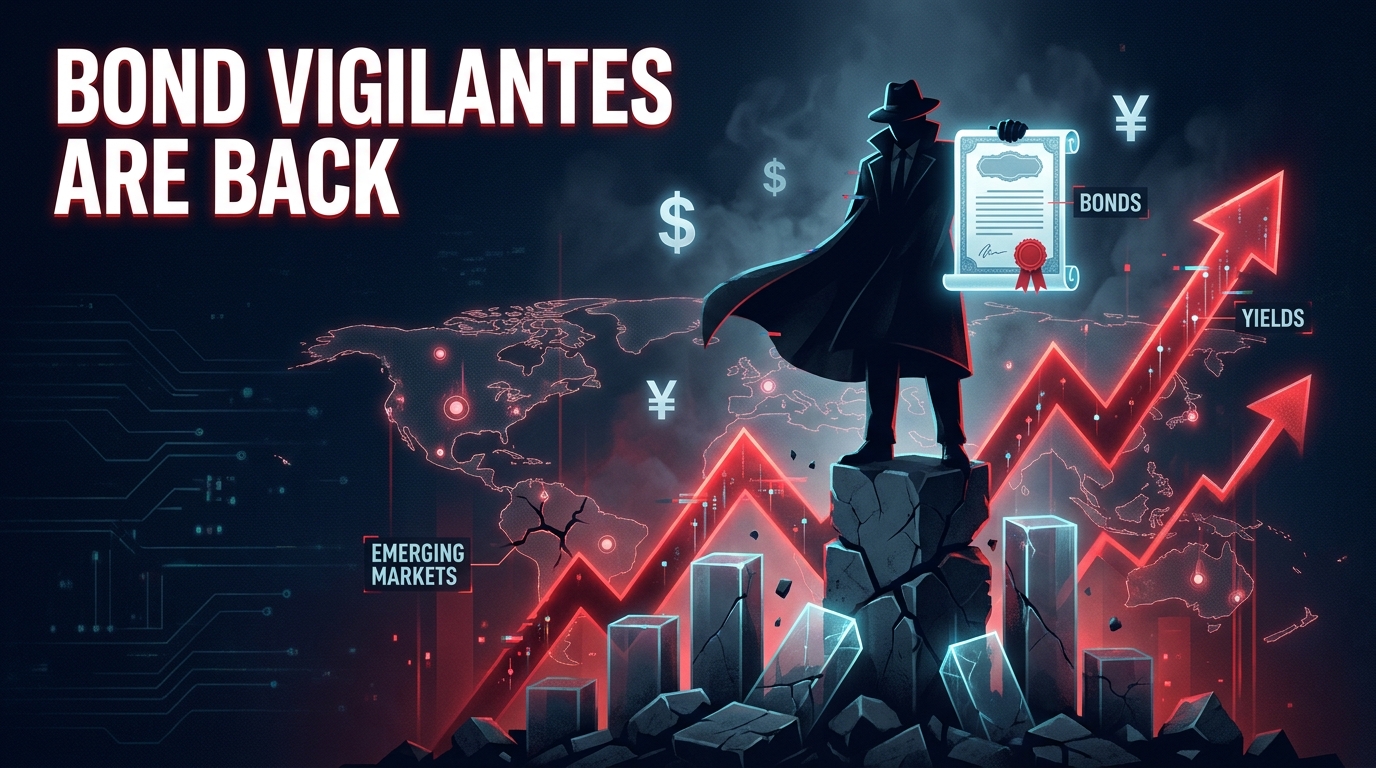
On May 14, 2026, a quiet alarm spread through trading desks from Tokyo to London to New York: government bond prices were falling sharply, and nobody was stepping in to buy. Within hours, the spread to equities, currencies, and commodity markets — a day that wiped out weeks of AI-fueled gains. At the center of the storm was a concept most investors hadn't thought about for years: the bond vigilante. JPMorgan's chief investment officer, Kay Herr, put it simply in a client note that quickly went viral: "Bond vigilantes are back."
2026년 5월 14일, 도쿄에서 런던, 뉴욕까지 거래 데스크 전반에 조용한 경보가 울렸어요. 국채 가격이 급락하고 있었는데, 아무도 매수에 나서지 않았어요. 몇 시간 만에 이 급락은 주식, 통화, 원자재 시장으로 번졌어요 — AI 랠리가 만들어 놓은 몇 주간의 수익이 단 하루 만에 사라졌죠. 폭풍의 중심에는 많은 투자자들이 수년간 잊고 있던 개념이 있었어요. 바로 '채권 자경단(bond vigilante)'이에요. JP모건의 최고투자책임자 케이 허는 고객 메모에서 단도직입적으로 말했어요. 이 메모는 순식간에 퍼져나갔죠. "채권 자경단이 돌아왔다."
What Is a Bond Vigilante?
The term was coined by economist Ed Yardeni in the 1980s to describe investors who "discipline" governments by selling their bonds. When a government runs large deficits or allows inflation to run hot, bond vigilantes respond by dumping government bonds — which pushes yields higher. Rising yields mean higher borrowing costs for governments, companies, and consumers — an effective market-driven punishment for fiscal misbehavior. After years of ultra-low interest rates and central bank bond-buying that made vigilantes largely irrelevant, they appear to have returned with considerable force.
이 용어는 1980년대 경제학자 에드 야르데니가 만들었어요. 국채를 팔아 정부를 '규율'하는 투자자들을 가리키는 말이에요. 정부가 대규모 적자를 내거나 인플레이션을 방치하면, 채권 자경단은 국채를 대거 매도해 수익률(yield)을 끌어올리는 방식으로 대응해요. 수익률 상승은 정부, 기업, 소비자 모두의 차입 비용 상승을 의미해요 — 재정 방만에 대한 시장의 자연스러운 처벌인 셈이죠. 수년간의 초저금리와 중앙은행의 국채 매입이 자경단을 사실상 무력화했지만, 이제 그들이 강력하게 귀환한 것처럼 보여요.
The Oil-Inflation-Bond Chain Reaction
The immediate trigger was oil: US President Trump left a high-stakes meeting with China's Xi Jinping without any progress on increasing energy flows through the Strait of Hormuz. Oil prices surged on renewed supply fears, and traders immediately recalculated what that would mean for inflation — which had only recently seemed under control. Higher oil means higher transportation and manufacturing costs — and that pressure eventually shows up in the price of everything from groceries to airline tickets. Bond investors, anticipating that central banks would be forced to raise rates to fight this renewed inflation, started selling bonds before those hikes arrived.
직접적인 도화선은 석유였어요. 트럼프 미국 대통령이 시진핑과의 중요 회담에서 호르무즈 해협 에너지 흐름 확대에 관한 아무런 성과 없이 자리를 떴죠. 공급 우려가 재점화되며 유가가 급등했고, 트레이더들은 이것이 인플레이션에 어떤 의미인지 즉각 재계산했어요 — 불과 얼마 전만 해도 통제 가능해 보였던 인플레이션을요. 유가 상승은 운송과 제조 비용 상승을 의미해요 — 그 압박은 결국 식료품부터 항공권까지 모든 것의 가격에 반영돼요. 채권 투자자들은 중앙은행들이 이 재점화된 인플레이션을 잡기 위해 금리를 올릴 수밖에 없다고 예상하며, 인상이 오기 전부터 채권을 팔기 시작했어요.
How Bonds Pulled Down the Stock Market
Here is where the chain reaction gets interesting for equity investors: when bond yields rise, the math of stock valuation changes fundamentally. The higher the on a "risk-free" government bond, the more a risky asset like a stock must offer in return — otherwise, why take the extra risk? The AI and semiconductor stocks that led the weeks-long rally — companies with sky-high valuations based on future earnings — were hit hardest. Wall Street had its worst day since March, and traders began pricing out all the rate cuts they had expected this year — and started pricing in possible hikes instead.
여기서 주식 투자자들에게 흥미로운 연쇄반응이 시작돼요. 채권 수익률이 오르면 주식 가치 평가의 기본 계산법이 근본적으로 달라지거든요. '무위험' 국채 수익률이 높아질수록, 주식 같은 위험 자산이 더 큰 수익을 제공해야 해요 — 그렇지 않으면 굳이 추가 위험을 질 이유가 없으니까요. 몇 주간의 랠리를 이끌었던 AI 및 반도체 주식들 — 미래 수익에 근거한 초고 밸류에이션의 기업들 — 이 가장 큰 타격을 받았어요. 월스트리트는 3월 이후 최악의 하루를 보냈고, 트레이더들은 올해 기대했던 금리 인하를 모두 제거하기 시작했어요 — 대신 금리 인상 가능성을 반영하기 시작했죠.
Emerging Markets Feel It First
If bond vigilantes return in the US, the tremors are felt most acutely in emerging markets like Brazil, Turkey, and South Korea. Rising US yields make the dollar more attractive, pulling capital away from emerging markets as investors chase higher US returns. Emerging-market stocks and currencies had their worst week since March 2026, while the dollar posted its best performance in over two months.
채권 자경단이 미국에서 귀환하면, 그 여진은 브라질, 터키, 한국 같은 신흥 시장에서 가장 먼저, 가장 강하게 느껴져요. 미국 수익률 상승은 달러를 더욱 매력적으로 만들어, 투자자들이 더 높은 미국 수익을 좇으면서 신흥 시장에서 자본이 빠져나가게 만들어요. 신흥 시장 주식과 통화는 2026년 3월 이후 최악의 한 주를 보냈고, 달러는 두 달 만에 최고의 퍼포먼스를 기록했어요.
What to watch
The return of bond vigilantes raises a fundamental question: will central banks, especially the Fed, be forced to resume raising interest rates — or will inflation fears fade as quickly as they arrived? Morgan Stanley sees a silver lining for the euro: a potential $200 billion flow of funds into European assets as investors diversify away from the dollar, which could push the euro to five-year highs. Watch for the spread between 10-year and 2-year Treasury yields over the coming weeks — when bond vigilantes are active, that spread widens in ways that precede equity repricing by several months, giving you an early-warning window that most retail investors miss entirely.
채권 자경단의 귀환은 근본적인 질문을 제기해요. 중앙은행, 특히 연준이 금리 인상을 재개할 수밖에 없게 될까요 — 아니면 인플레이션 우려가 찾아온 것만큼 빠르게 사라질까요? 모건 스탠리는 유로에서 희망을 봐요. 투자자들이 달러에서 분산하면서 유럽 자산으로 최대 2,000억 달러의 자금이 유입될 수 있고, 이는 유로를 5년 만의 고점으로 끌어올릴 수 있다고 봐요. 앞으로 몇 주간 10년물과 2년물 미 국채 금리 스프레드를 주시하세요. 채권 자경단이 활발하게 움직일 때 그 스프레드는 주식 재평가보다 수개월 앞서 벌어지는 패턴이 있어요. 여러분에게 대부분의 개인 투자자가 놓치는 조기 경보 창문이 열려 있는 거예요.
이 칼럼이 마음에 드셨나요?
새 칼럼이 발행되면 영문 + 한글 본문을 통째로 메일로 보내드려요. 매일 아침, 광고 없이.
언제든 한 번에 해지할 수 있어요.