Workplace2026.05.08
The $10 Trillion Engagement Collapse: What Gallup's Data Means for Your Team
직원 몰입도 붕괴: 갤럽 연구가 당신의 팀에 보내는 경고
읽기 도움말Intro
The Monday Morning Question
월요일 아침의 질문
Think about the last time you walked into work feeling genuinely excited about what the day might bring. For a growing number of workers around the world, that feeling has become surprisingly rare — and new research from Gallup confirms the trend is no accident.
마지막으로 오늘 하루가 정말 기대된다는 설렘을 느끼며 출근했던 때가 언제인지 생각해보세요. 전 세계 수많은 직장인에게 그런 설렘은 점점 낯선 감정이 되어가고 있고, 갤럽의 새 연구는 이것이 우연이 아님을 확인해줘요.
What's new
A $10 Trillion Problem the World Ignored
세계가 외면한 10조 달러의 문제
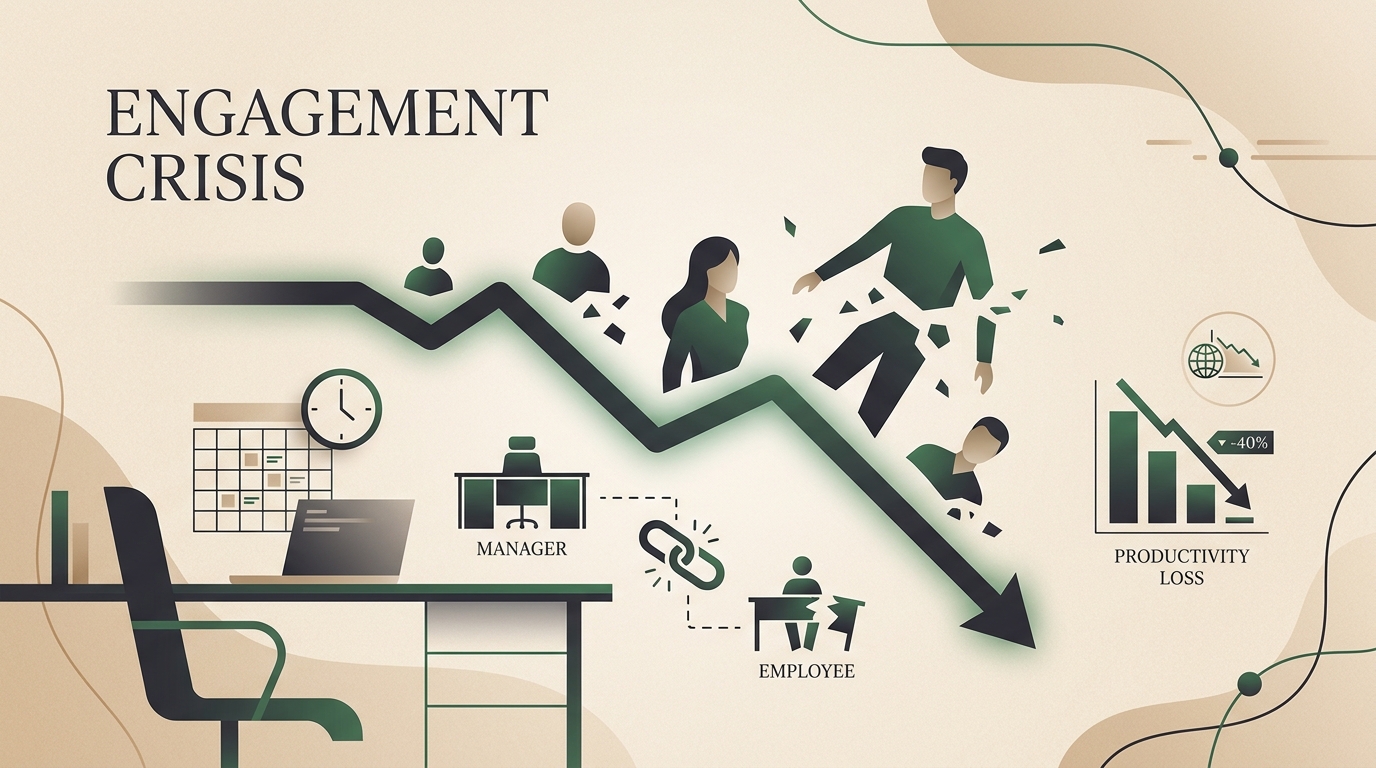
Gallup's latest global study reveals a sharp decline in employee engagement over the past two years, with the research firm estimating that low engagement now costs the world economy roughly $10 trillion in lost productivity. To put that number in perspective, $10 trillion represents approximately 9% of global GDP — a figure larger than the entire annual economic output of Japan and Germany combined. The study points to three interconnected forces driving the downturn: post-pandemic fatigue, widespread economic uncertainty, and a decline in the overall quality of management.
갤럽의 최신 글로벌 연구는 지난 2년간 직원 몰입도가 급격히 하락했으며, 이로 인한 생산성 손실이 전 세계 경제에 약 10조 달러의 비용을 초래하고 있다고 추산해요. 이 숫자를 실감하기 쉽게 말하자면, 10조 달러는 전 세계 GDP의 약 9%에 해당하며, 일본과 독일의 연간 경제 규모를 합친 것보다도 큰 수치예요. 연구는 이 하락을 이끈 세 가지 서로 얽힌 요인으로 팬데믹 이후 누적된 피로, 광범위한 경제적 불확실성, 그리고 전반적인 관리자 품질 저하를 꼽았어요.
Why it matters
Why Korea Should Pay Especially Close Attention
한국이 특히 주목해야 하는 이유
South Korea has consistently ranked among the lowest countries in Gallup's global engagement surveys, making this new data more than just an abstract global headline. Low discretionary effort — meaning workers doing only the minimum required, rather than going beyond — is the silent driver behind this lost productivity, and it tends to be invisible until it is already too late. What makes this particularly relevant for Korean workplaces is that the very management styles most common here — hierarchical oversight, limited feedback, long hours as a proxy for commitment — are precisely the ones Gallup identifies as accelerating disengagement.
한국은 갤럽의 글로벌 몰입도 조사에서 지속적으로 최하위권에 머물러왔기 때문에, 이번 연구는 한국 직장인에게 단순한 해외 뉴스가 아니에요. 낮은 자발적 노력, 즉 직원들이 최소한의 업무만 하고 그 이상을 기울이지 않는 상태는 이 생산성 손실의 보이지 않는 주범이며, 대개 이미 손쓰기 늦어진 후에야 눈에 띄어요. 이것이 한국 직장에 특히 중요한 이유는, 국내에서 가장 흔한 관리 방식 — 위계적 감독, 제한적인 피드백, 헌신의 척도로서의 장시간 근무 — 이 갤럽이 몰입도 저하를 가속시킨다고 지목한 방식과 정확히 일치하기 때문이에요.
Context
The Manager Is the Message
관리자가 곧 메시지다
One of Gallup's most consistent findings across decades of research is that the quality of the immediate manager accounts for roughly 70% of the variation in team engagement scores. Organizations where manager-employee relationships are strong — built on regular conversations, genuine recognition, and clear expectations — consistently show higher engagement even in economically difficult periods. A separate analysis by employee experience platform Culture Amp adds a related data point: confidence in company leadership has fallen by 19 percentage points over the past five years, a metric that most organizations do not even track. Experts now argue that tracking employee confidence — distinct from satisfaction or well-being — may be a more reliable predictor of future performance than traditional engagement surveys alone.
수십 년간의 갤럽 연구에서 가장 일관되게 나타나는 결과 중 하나는, 직속 관리자의 품질이 팀 몰입도 점수 차이의 약 70%를 결정한다는 점이에요. 관리자-직원 관계가 탄탄한 조직, 즉 정기적인 대화와 진심 어린 인정, 명확한 기대치를 바탕으로 운영되는 곳은 경제적으로 어려운 시기에도 꾸준히 높은 몰입도를 유지해요. 직원 경험 플랫폼 컬쳐앰프의 별도 분석도 이와 맞닿은 데이터를 제공해요. 회사 리더십에 대한 신뢰도가 지난 5년간 19%p 하락했지만, 대부분의 조직은 이를 측정조차 하지 않고 있다는 점이에요. 전문가들은 이제 직원 신뢰도, 즉 만족도나 웰빙과는 구분되는 이 지표를 추적하는 것이 기존 몰입도 설문보다 미래 성과를 더 신뢰성 있게 예측할 수 있다고 주장해요.
Quick fix
What You Can Do Starting Monday
다음 월요일부터 할 수 있는 것
For individual workers, the research suggests that engagement is not simply a feeling that happens to you — it is partly shaped by the conversations you choose to have, or avoid, with your manager. For managers and team leaders, Gallup's prescription is direct: invest in more frequent one-on-one conversations, provide specific recognition rather than vague praise, and create space for employees to voice uncertainty without fear. Your most actionable step this week is a five-minute check-in with one disengaged team member — not about their deliverables, but about whether they feel their work matters; Gallup's data shows that one conversation, repeated consistently, moves the engagement needle more than any company-wide initiative.
직원 개인에게 있어 몰입도는 그냥 생기거나 사라지는 감정이 아니에요. 관리자와 어떤 대화를 나누고 어떤 대화를 피하는지에 따라 상당 부분 결정돼요. 관리자와 팀 리더에게 갤럽은 명확한 처방을 내려요. 일대일 대화를 더 자주 나누고, 모호한 칭찬 대신 구체적인 인정을 제공하며, 직원들이 두려움 없이 불확실성을 말할 수 있는 공간을 만들라는 것이에요. 이번 주 여러분이 취할 수 있는 가장 실행 가능한 단 하나의 조치는 소외된 팀원 한 명과의 5분짜리 체크인이에요. 성과물이 아니라, 자신의 일이 의미 있다고 느끼는지에 대해서요. 갤럽 데이터에 따르면, 그 대화를 꾸준히 반복하는 것이 어떤 회사 전체 이니셔티브보다 몰입도를 더 많이 바꿔요.
이 칼럼이 마음에 드셨나요?
새 칼럼이 발행되면 영문 + 한글 본문을 통째로 메일로 보내드려요. 매일 아침, 광고 없이.
언제든 한 번에 해지할 수 있어요.