Markets2026.05.03
The New Gold Rush: Why Central Banks Are Buying Gold and What It Means for Your Money
새로운 골드러시: 각국 중앙은행이 금을 사들이는 이유와 당신의 돈에 주는 의미
읽기 도움말Gold at All-Time Highs
Gold hit a new all-time high of $3,480 per troy ounce on Friday — its 14th record this year alone. That is a 32% gain since January, making gold the best-performing major asset class of 2026. But the more interesting story is not the price itself. It is who is buying, and why. Gold is what investors call a safe-haven asset — an investment that tends to hold or increase its value when financial markets are turbulent or when confidence in currencies weakens. Unlike stocks, gold pays no dividend. Unlike bonds, it pays no interest. Its value comes entirely from trust: the belief that it will remain scarce, durable, and accepted as a store of wealth across generations and across borders.
금이 금요일 트로이 온스(troy ounce)당 3,480달러의 사상 최고가를 기록했습니다. 올해만 14번째 신고가입니다. 1월 이후 32% 상승하며 2026년 전체 주요 자산군 중 단연 최고의 수익률을 기록하고 있습니다. 그러나 더 흥미로운 이야기는 가격 자체가 아닙니다. 누가 사고 있는지, 그리고 왜 사는지입니다. 금은 투자자들이 안전자산(safe-haven asset)이라고 부르는 것입니다. 금융시장이 불안하거나 통화에 대한 신뢰가 약해질 때 가치를 유지하거나 상승하는 경향이 있는 투자 자산입니다. 주식과 달리 금은 배당금을 지급하지 않습니다. 채권과 달리 이자도 없습니다. 금의 가치는 전적으로 신뢰에서 옵니다. 세대와 국경을 초월하여 희소하고, 내구성 있으며, 부의 저장 수단으로 받아들여질 것이라는 믿음입니다.
The Unit That Measures Gold
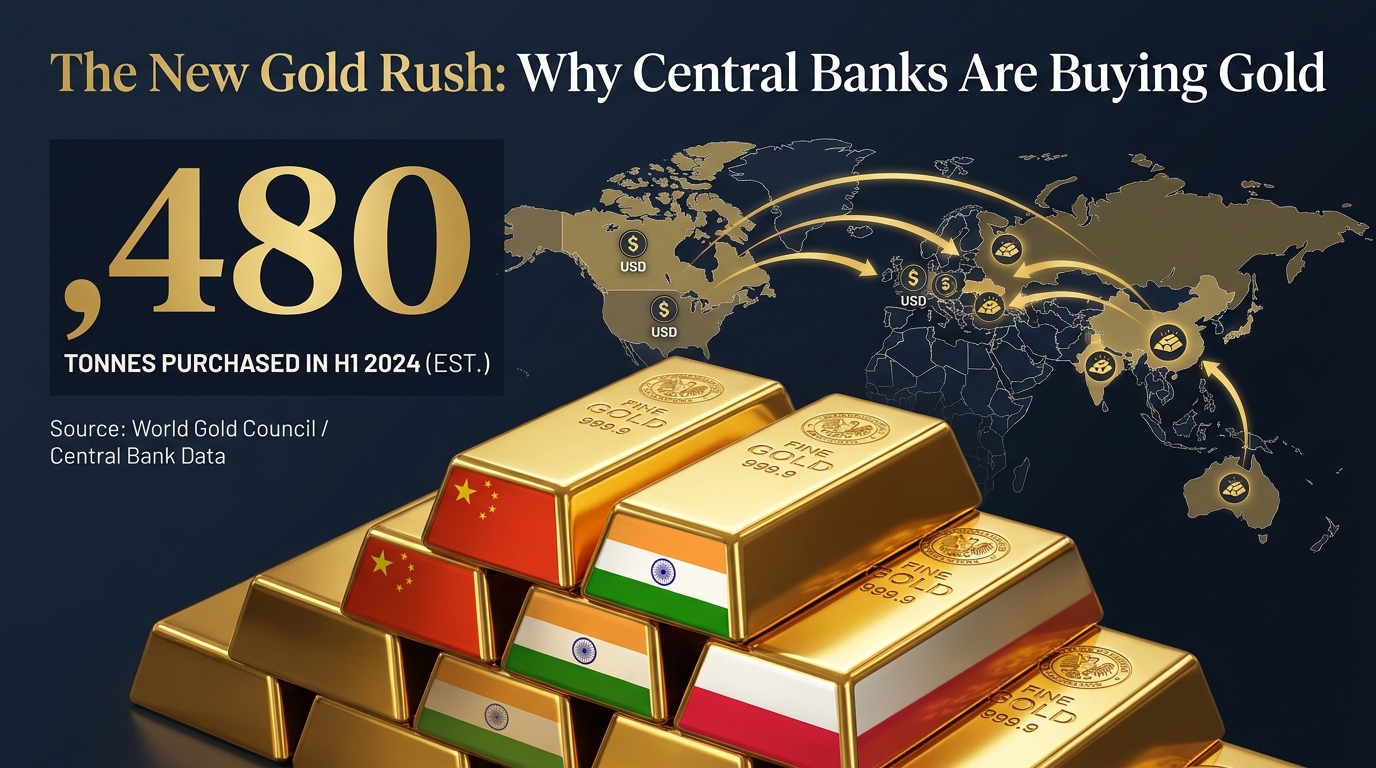
A quick note on units: gold is measured in troy ounces, not the standard ounces used for everyday items. One troy ounce equals approximately 31.1 grams — about 10% heavier than a standard ounce. The troy system dates to medieval European trade fairs. Today it remains the global standard for pricing gold, silver, platinum, and other precious metals. When you see a gold price headline, it always refers to troy ounces. The driving force behind this year's gold surge is not retail investors or funds — it is the world's central banks. According to the World Gold Council, central banks purchased 295 tonnes of gold in Q1 2026, a 34% increase from the same period last year. China led with 88 tonnes, followed by India (41 tonnes) and Poland (28 tonnes). These are not small portfolio adjustments. They represent a deliberate strategic shift in how governments manage national wealth.
단위에 대한 짧은 설명: 금은 일상적인 물건에 사용하는 일반 온스가 아닌 트로이 온스(troy ounce)로 측정됩니다. 1트로이 온스는 약 31.1그램으로, 일반 온스보다 약 10% 무겁습니다. 트로이 시스템은 중세 유럽 무역 박람회에서 유래했습니다. 오늘날에도 금, 은, 백금 및 기타 귀금속 가격 책정의 글로벌 표준으로 남아 있습니다. 금 가격 헤드라인을 볼 때, 그것은 항상 트로이 온스를 기준으로 합니다. 올해 금 급등의 원동력은 개인 투자자나 헤지펀드가 아닙니다. 바로 세계의 중앙은행들입니다. 세계금위원회(World Gold Council)에 따르면 중앙은행들은 2026년 1분기에 295톤의 금을 매입했으며, 이는 전년 동기 대비 34% 증가한 수치입니다. 중국이 88톤으로 선두를 달렸고, 인도(41톤)와 폴란드(28톤)가 뒤를 이었습니다. 이는 소소한 포트폴리오 조정이 아닙니다. 정부가 국부를 관리하는 방식의 의도적이고 전략적인 전환을 나타냅니다.
Reserve Currencies and De-Dollarization
To understand why, you need to understand what a reserve currency is. A reserve currency is a currency that other countries' central banks hold in large quantities as part of their foreign exchange (FX) reserves — the savings accounts of national governments. For most of the past 80 years, the U.S. dollar has been the dominant reserve currency, accounting for over 60% of global central bank holdings. This gives the United States extraordinary power: it can borrow cheaply, run large deficits, and use the dollar as a foreign policy tool. What is happening now is called — a deliberate process of reducing dependence on the U.S. dollar in international trade, finance, and reserves. The U.S. dollar's share of global FX reserves has already fallen from 66% in 2000 to 57% today. Multiple central banks from emerging market countries have publicly stated goals to reduce dollar holdings below 50% within a decade. The catalyst has been geopolitical: when the U.S. and its allies froze Russia's $630 billion in dollar-denominated reserves in 2022, other governments took note and began asking: what if our reserves were frozen too?
이유를 이해하려면 기축통화(reserve currency)가 무엇인지 알아야 합니다. 기축통화란 다른 나라의 중앙은행이 외환보유고(foreign exchange reserves) — 국가 정부의 저축 계좌 — 의 일부로 대량 보유하는 통화입니다. 지난 80년의 대부분 동안 미국 달러는 지배적인 기축통화로, 전 세계 중앙은행 보유액의 60% 이상을 차지했습니다. 이는 미국에 막대한 권력을 부여합니다. 저렴하게 돈을 빌리고, 대규모 재정적자를 운영하며, 달러를 외교 정책 도구로 사용할 수 있습니다. 지금 일어나고 있는 것은 탈달러화(de-dollarization)라고 합니다. 국제 무역, 금융, 외환보유고에서 미국 달러 의존도를 의도적으로 줄이는 과정입니다. 글로벌 외환보유고에서 달러의 점유율은 이미 2000년 66%에서 오늘날 57%로 떨어졌습니다. 신흥시장 국가들의 여러 중앙은행이 10년 내에 달러 보유 비중을 50% 미만으로 줄이겠다는 목표를 공개적으로 밝혔습니다. 촉매는 지정학적이었습니다. 2022년 미국과 동맹국들이 러시아의 6,300억 달러 달러 표시 외환보유고를 동결했을 때, 다른 정부들은 주목하고 물었습니다. 우리의 보유고도 동결될 수 있다면?
Why Gold? Real Assets, Hedging, and History
Gold is the logical alternative. It cannot be frozen by any government because it is a physical real asset — a tangible item with intrinsic value, not a digital entry in a foreign central bank's ledger. It has no counterparty risk: owning a bar of gold does not depend on anyone else's promise to pay. This is precisely what makes it attractive in a world where governments are increasingly willing to weaponize financial systems against adversaries. Investors also use gold as a — a position taken specifically to reduce the risk of another investment losing value. In this context, gold acts as a against currency debasement: the gradual erosion of a currency's purchasing power, typically caused by printing too much money, running large fiscal deficits, or persistent inflation. When the U.S. dollar weakens — as it has by 9.5% against major currencies since January — gold priced in dollars tends to rise mechanically, because it takes more dollars to buy the same amount of gold. To put today's move in historical context: gold spent most of the 20th century at a fixed price because of the gold standard — a monetary system in which a currency's value was directly tied to a fixed quantity of gold. The United States formally abandoned the gold standard in 1971, when President Nixon ended the convertibility of dollars to gold. Since then, gold has traded freely. From $35 per troy ounce in 1971 to $3,480 today represents a 99-fold increase over 55 years — though most of that gain has been offset by dollar inflation over the same period.
금은 논리적인 대안입니다. 어떤 정부도 금을 동결할 수 없습니다. 금은 실물자산(real asset) — 외국 중앙은행 장부의 디지털 항목이 아닌 고유한 가치를 지닌 유형의 물체 — 이기 때문입니다. 금에는 거래상대방 위험(counterparty risk)이 없습니다. 금괴를 소유하는 것은 다른 누군가의 지급 약속에 의존하지 않습니다. 이것이 바로 정부들이 적국에 대해 금융 시스템을 무기화하는 데 점점 더 기꺼이 나서는 세상에서 금을 매력적으로 만드는 이유입니다. 투자자들은 또한 금을 헤지(hedge) 수단으로 사용합니다. 다른 투자 자산이 가치를 잃을 위험을 줄이기 위해 특별히 취하는 포지션입니다. 이 맥락에서 금은 통화 가치 하락(currency debasement)에 대한 헤지 역할을 합니다. 너무 많은 돈을 찍어내거나, 대규모 재정적자를 운영하거나, 지속적인 인플레이션으로 인해 통화의 구매력이 점진적으로 침식되는 현상입니다. 미국 달러가 약해질 때 — 1월 이후 주요 통화 대비 9.5% 하락했듯이 — 달러로 표시된 금 가격은 기계적으로 상승하는 경향이 있습니다. 같은 양의 금을 구매하는 데 더 많은 달러가 필요하기 때문입니다. 오늘의 움직임을 역사적 맥락에서 살펴보면: 금은 20세기의 대부분을 금본위제(gold standard) — 통화 가치가 고정된 금의 양에 직접 연동된 통화 시스템 — 때문에 고정 가격에 머물렀습니다. 미국은 1971년 닉슨 대통령이 달러의 금 태환을 종료하면서 금본위제를 공식적으로 포기했습니다. 그 이후 금은 자유롭게 거래되고 있습니다. 1971년 트로이 온스당 35달러에서 오늘날 3,480달러는 55년 동안 99배 상승을 나타내지만, 같은 기간 달러 인플레이션이 대부분의 이익을 상쇄했습니다.
Institutional Rotation and the Long Arc
Norway's Government Pension Fund Global — the world's largest sovereign wealth fund at $1.9 trillion — disclosed this week that it had reduced its U.S. equity weight from 47% to 42% of its equity portfolio. Singapore's GIC made a similar tactical reduction. These sovereign wealth funds are not buying gold directly, but their rotation out of dollar assets amplifies the same structural trend: major institutional investors are diversifying away from concentrated U.S. exposure. When the world's largest pools of capital move, they move slowly but they move a long way. What does mean in practice? It does not mean the dollar collapses overnight. Reserve currency transitions take decades — the British pound's decline from global dominance after World War II took more than 30 years. But the direction matters. A world in which the dollar accounts for 50% of reserves rather than 66% is a world in which U.S. interest rates must be somewhat higher to attract buyers for its debt, and in which the U.S. has less ability to run large deficits without consequence. The practical implication for retail investors is that gold's new behavior — rising alongside rather than against risk assets during inflationary expansions — may require a rethinking of traditional portfolio allocation models calibrated during an era of dollar dominance and low geopolitical friction.
세계 최대 국부펀드인 노르웨이 국부펀드(1조 9,000억 달러) — 는 이번 주 주식 포트폴리오에서 미국 주식 비중을 47%에서 42%로 줄였다고 공시했습니다. 싱가포르의 GIC도 유사한 전술적 축소를 단행했습니다. 이들 국부펀드는 금을 직접 매입하는 것은 아니지만, 달러 자산에서의 전환은 같은 구조적 추세를 증폭시킵니다. 주요 기관 투자자들이 집중된 미국 익스포저에서 다각화하고 있다는 것입니다. 세계 최대의 자본 풀이 움직일 때, 그들은 천천히 움직이지만 멀리 나아갑니다. 탈달러화는 실제로 무엇을 의미할까요? 달러가 하룻밤 사이에 붕괴한다는 의미가 아닙니다. 기축통화 전환은 수십 년이 걸립니다. 2차 세계대전 이후 영국 파운드의 글로벌 패권 쇠퇴에는 30년 이상이 소요됐습니다. 그러나 방향이 중요합니다. 달러가 외환보유고의 66%가 아닌 50%를 차지하는 세계는 미국이 부채에 대한 구매자를 끌어들이기 위해 금리를 어느 정도 더 높게 유지해야 하고, 미국이 결과 없이 대규모 적자를 운영할 능력이 줄어드는 세계입니다. 개인 투자자들에게 실질적 시사점은 금의 자산군으로서의 새로운 행동 방식이에요. 인플레이션 확장기에 위험 자산에 반하는 것이 아니라 함께 상승하는 경향이 있어서, 달러 패권과 낮은 지정학적 마찰의 시대에 보정된 전통적 포트폴리오 배분 모델을 재고해야 할 수 있어요.
What to watch
For individual investors, the gold story raises a practical question: should you hold gold? The conventional financial planning answer is modest — most advisors suggest 5% to 10% of a portfolio in gold or gold-adjacent assets (such as gold ETFs or gold mining stocks) as a against tail risks. Gold is not an income-generating asset; it does not compound. But it has historically preserved purchasing power across long periods of currency debasement, geopolitical turbulence, and financial system stress. For Korean investors, the current gold rally intersects with a strengthening won. The Korean won has appreciated to 1,338 per dollar — a meaningful gain from above 1,450 earlier this year. A stronger won reduces the local-currency return of dollar-priced assets like gold, but it also reflects the same underlying dynamic: money is flowing out of the dollar globally. The Bank of Korea holds approximately $410 billion in foreign exchange reserves, with a significant portion in U.S. Treasuries — assets whose value is being eroded by both lower yields and dollar weakness simultaneously. Watch for the pace of central bank gold purchases in each IMF quarterly report — when that pace accelerates simultaneously across emerging markets, it is the most reliable forward indicator that dollar-denominated asset pricing is about to face structural pressure that retail investors rarely see coming.
개인 투자자들에게 금 이야기는 실질적인 질문을 제기합니다. 금을 보유해야 할까요? 기존의 재무 계획 관점에서의 답은 적당한 비율입니다. 대부분의 어드바이저들은 꼬리 위험(tail risks)에 대한 헤지로 포트폴리오의 5%에서 10%를 금이나 금 관련 자산(금 ETF나 금광주 등)에 배분할 것을 권장합니다. 금은 수익 창출 자산이 아닙니다. 복리로 불어나지 않습니다. 그러나 역사적으로 통화 가치 하락, 지정학적 혼란, 금융 시스템 스트레스의 장기간에 걸쳐 구매력을 보존해 왔습니다. 한국 투자자들에게 현재의 금 랠리는 강세 원화와 교차됩니다. 한국 원화는 올해 초 1,450원 이상에서 달러당 1,338원으로 의미 있는 강세를 보였습니다. 강한 원화는 금처럼 달러로 표시된 자산의 원화 환산 수익률을 낮춥니다. 그러나 동시에 동일한 기저 역학을 반영합니다. 글로벌에서 달러 밖으로 자금이 흘러나오고 있다는 것입니다. 한국은행은 약 4,100억 달러의 외환보유고를 보유하고 있으며, 상당 부분이 미국 국채에 투자되어 있습니다. 이는 낮아진 금리와 달러 약세 모두에 의해 동시에 가치가 잠식되고 있는 자산입니다. IMF 분기 보고서에서 중앙은행의 금 매입 속도를 주시하세요. 신흥 시장 전반에서 그 속도가 동시에 가속화될 때, 여러분 앞에 있는 것은 개인 투자자들이 거의 보지 못하는 구조적 압력이 달러 표시 자산 가격에 가해지려 한다는 가장 신뢰할 만한 선행 지표예요.
이 칼럼이 마음에 드셨나요?
새 칼럼이 발행되면 영문 + 한글 본문을 통째로 메일로 보내드려요. 매일 아침, 광고 없이.
언제든 한 번에 해지할 수 있어요.