Markets2026.05.19
Japan's Treasury Card: Tokyo Just Stepped Back from Its Biggest Weapon
일본의 미국채 카드: 도쿄가 최강의 무기를 내려놓은 이유
읽기 도움말Intro
The Weapon Nobody Wanted to Use
아무도 쓰고 싶지 않았던 무기
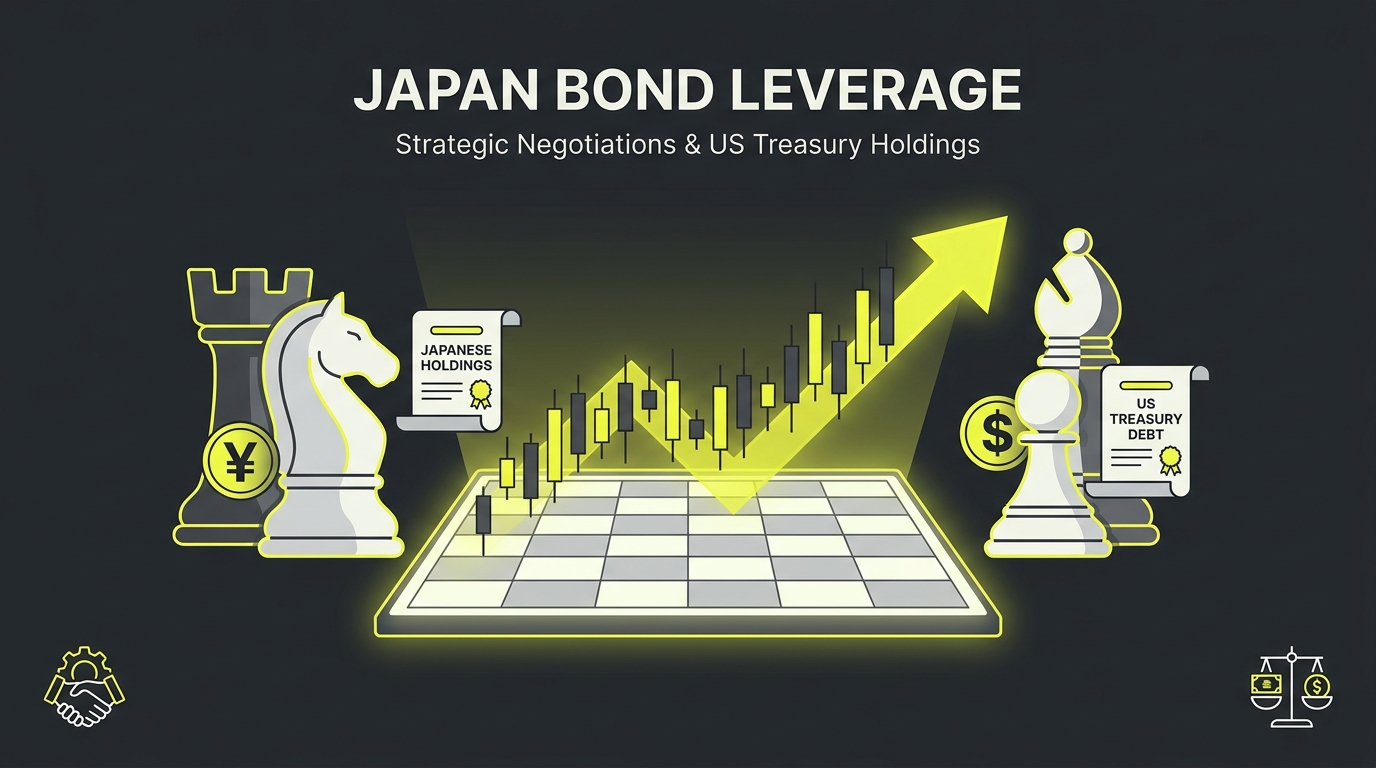
Imagine you are sitting across the table from someone who owes you a lot of money — and they know you could call in the debt at any moment. That has been Japan's position in its trade negotiations with the United States — a country holding over $1.1 trillion in US government bonds, the largest foreign of any nation.
당신에게 많은 빚을 진 사람과 협상 테이블에 마주 앉아 있다고 상상해봐요. 그리고 그 사람은 당신이 언제든 빚을 갚으라고 요구할 수 있다는 걸 알고 있어요. 이것이 바로 미국-일본 무역 협상에서 일본의 위치였어요. 일본은 약 1.1조 달러의 미국 국채를 보유한, 전 세계에서 가장 큰 외국인 채권 보유국이에요.
What's new
Tokyo Blinks First
도쿄가 먼저 눈을 깜빡였다
On May 18, a senior Japanese Finance Ministry official publicly sowed doubt over any possibility of selling US Treasuries as in the ongoing trade talks with Washington. The statement was notable because markets had spent weeks pricing in the risk that Japan might actually threaten to dump its massive bond holdings to gain negotiating power over tariffs. After the announcement, the dollar fell and the yen strengthened — a direct sign that markets had been quietly pricing in the threat all along.
5월 18일, 일본 재무성의 고위 관리가 미국과의 무역 협상에서 미국채 매도를 협상 카드로 사용할 가능성에 공개적으로 의문을 표명했어요. 이 발언이 주목받은 이유는, 시장이 몇 주 동안 일본이 관세 협상에서 유리한 위치를 차지하기 위해 실제로 채권을 매도할지도 모른다는 위험을 가격에 반영해왔기 때문이에요. 발표 이후 달러는 하락하고 엔화는 강세를 보였어요. 이는 시장이 그 위협을 내내 조용히 가격에 반영해왔다는 직접적인 신호예요.
Why it matters
When the Biggest Card Stays on the Table
가장 강력한 카드가 테이블 위에 그대로 남을 때
Japan's decision not to use its Treasury holdings as matters for several reasons that go well beyond US-Japan relations alone. First, if Japan had sold even a fraction of its Treasuries, it could have pushed US bond yields sharply higher, raising borrowing costs for millions of Americans and rattling global credit markets. Second, this move would have set a — signaling to China and other major creditors that US Treasuries can be treated as a weapon, not just a safe investment.
일본이 미국채를 협상 레버리지로 사용하지 않기로 한 결정은 미-일 관계를 넘어 여러 이유에서 중요한 의미를 가져요. 우선, 일본이 보유 미국채의 일부만 매도했더라도 미국 채권 금리가 급격히 상승해 수백만 명의 미국인 대출 비용을 높이고 글로벌 신용 시장을 흔들 수 있었어요. 두 번째로, 이 행보는 하나의 선례가 될 수 있었어요. 중국과 다른 주요 채권 보유국들에게 미국채가 안전한 투자처일 뿐 아니라 지정학적 무기로 쓰일 수 있다는 신호를 보내는 것이거든요.
Context
The Bigger Picture in Bond Markets
채권 시장의 더 큰 그림
Even without Japan's intervention, US long-term bond yields have been near their highest levels since 2023, driven by persistent inflation and concerns about the US government's growing deficit. Separately, data Monday showed that foreign holders of US Treasuries cut their holdings of short-term bills in March while shifting into longer-dated bonds — a sign of changing appetite among global investors. For Korean investors and institutions — which hold roughly $80 billion in US Treasuries — any sharp move in global bond markets carries real consequences for portfolio performance and won currency hedging costs. The key difference between Korea's and Japan's Treasury positions is that Korea's holdings are proportionally smaller relative to its trade surplus with the United States — meaning Seoul has less negotiating but also faces less pressure to use it as a retaliatory tool in trade disputes.
일본의 개입이 없어도 미국 장기 채권 금리는 지속적인 인플레이션과 미국 정부의 재정 적자 우려로 2023년 이후 최고 수준 근처에서 맴돌고 있어요. 별도로, 월요일에 발표된 데이터에 따르면 해외 미국채 보유자들이 3월에 단기채를 줄이고 장기채로 이동했어요. 이는 글로벌 투자자들의 달라진 선호를 보여주는 신호예요. 약 800억 달러의 미국채를 보유한 한국 투자자와 기관들에게도 글로벌 채권 시장의 급격한 움직임은 포트폴리오 수익과 원화 헤징 비용에 실질적인 영향을 미쳐요. 한국과 일본의 미 국채 포지션의 핵심 차이점은 한국의 보유액이 미국과의 무역 흑자 대비 상대적으로 작다는 것이에요. 서울이 협상 레버리지가 적다는 뜻이지만, 동시에 무역 분쟁에서 보복 수단으로 그 레버리지를 사용해야 한다는 압박도 적다는 의미예요.
What to watch
What to Watch Next
앞으로 주목할 것들
Japan's does not mean the Treasury card is permanently off the table — trade negotiations are still ongoing and could take unexpected turns. Investors should watch whether US-Japan talks produce a framework agreement in the coming weeks, because a breakdown in negotiations could quickly revive fears of Treasury sales. Watch for any shift in Japan's Treasury holdings reported in monthly TIC data — when a country holding $1.1 trillion in US debt begins to move even 5% of that position, the yield implications arrive before any official statement, and that gap is where the real lives.
일본의 자제가 미국채 카드를 영구적으로 접었다는 의미는 아니에요. 무역 협상은 여전히 진행 중이고 예상치 못한 방향으로 흘러갈 수도 있어요. 투자자들은 향후 몇 주 안에 미-일 협상이 기본 합의 틀을 만들어낼 수 있을지 주목해야 해요. 협상이 깨질 경우 미국채 매도 공포가 빠르게 되살아날 수 있거든요. 월간 TIC 데이터에 보고되는 일본의 미 국채 보유 변화를 주시하세요. 1.1조 달러의 미국 국채를 보유한 나라가 그 포지션의 단 5%만 움직이기 시작해도, 수익률 영향은 어떤 공식 성명보다 먼저 도착해요. 여러분이 주목해야 할 실제 신호가 그 간극에 있어요.
이 칼럼이 마음에 드셨나요?
새 칼럼이 발행되면 영문 + 한글 본문을 통째로 메일로 보내드려요. 매일 아침, 광고 없이.
언제든 한 번에 해지할 수 있어요.